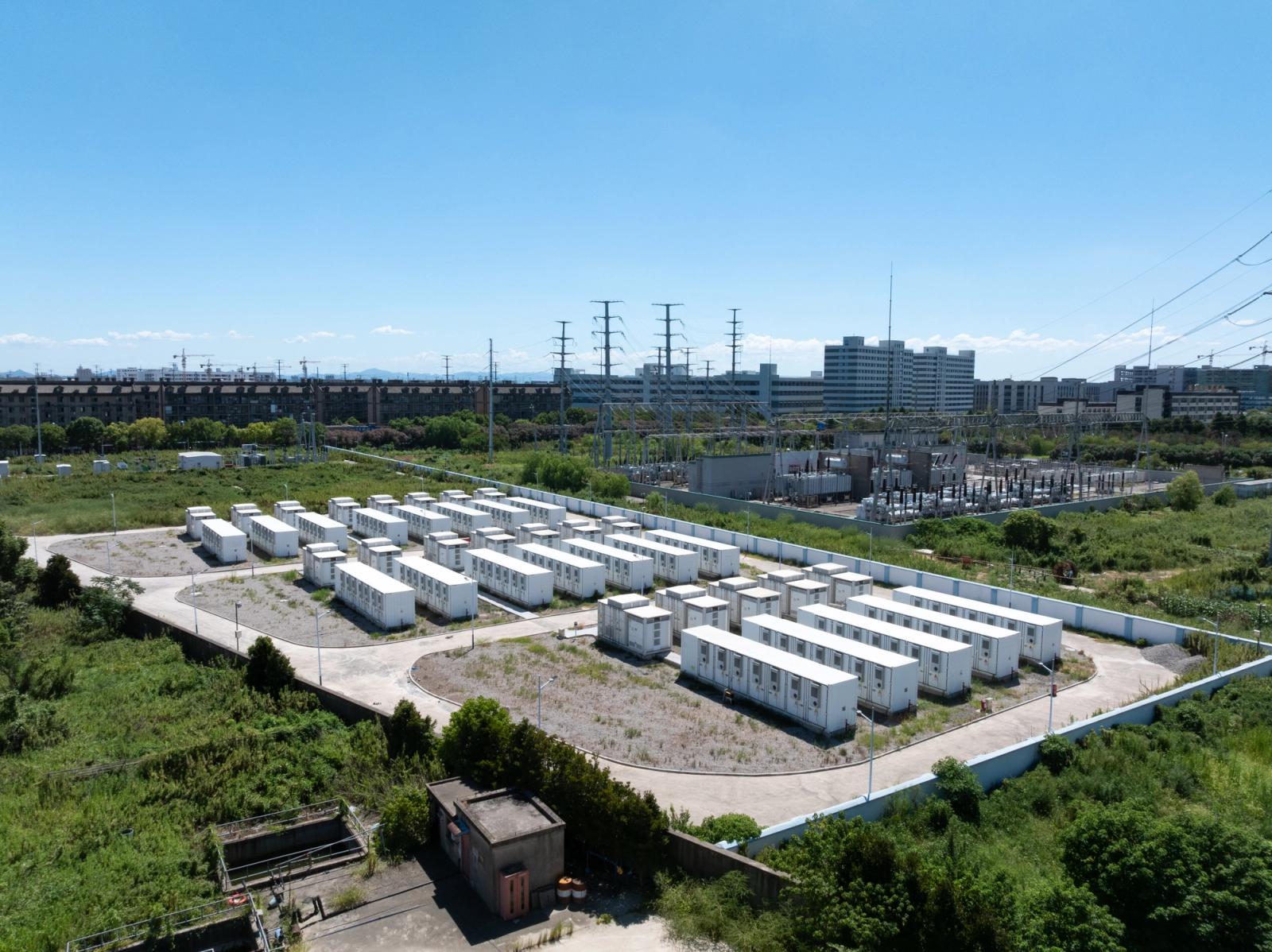
The world added 108 gigawatts of battery storage in 2025, 40 percent more than in 2024, leaving its fleet eleven times the size it was in 2021. Batteries are now the fastest growing power technology there is.
Four years ago the world was adding about ten gigawatts of battery storage a year. In 2025 it added 108, a gigawatt being a billion watts, roughly the output of one large power station. The International Energy Agency records that as a 40 percent rise on 2024, and enough to leave the world's installed capacity, the power its whole battery fleet could deliver at once, eleven times what it was in 2021. Batteries are now the fastest growing power technology there is.
How we know
The figure comes from the IEA's Global Energy Review 2026, the agency's annual account of what the world actually built. It records 108 GW of new battery storage in 2025, about 80 percent of it utility scale, meaning wired into the grid rather than sitting behind a household or business meter. It also finds that lithium iron phosphate cells, a chemistry that costs less and tolerates being charged and discharged more often, now account for around 90 percent of what goes in, up from below half five years ago.
BloombergNEF counted the same year separately and put it at 112 GW and 307 gigawatt hours, up 48 percent, excluding pumped hydro, the reservoir schemes that store energy by pumping water uphill. The two totals differ. Both point the same way, and both leave 2025 above 100 GW for the first time, because on either set of growth rates 2024 fell well short of it.
Why it matters
A battery does one thing a power station cannot: it moves electricity through time. That is why storage duration, the number of hours a battery can keep delivering at full power before it runs empty, is the number to watch. Most projects still cluster around two hours, but the IEA reports a rising number built for four or more, and attributes the shift to how much more a grid carrying solar power values that flexibility.
The growth is spreading past the three big markets too, to Australia and to countries in the Middle East, where the agency describes storage as an essential part of keeping the lights on while renewables scale. Two of its other findings explain the shape of that: lithium iron phosphate won the market on cost and on how well it takes repeated cycling, and storage duration is being stretched by the value of flexibility on grids carrying more solar. Whether the batteries would arrive is now answered in the installation figures. What each grid chooses to do with them is the open question.
Most projects can still only run for about two hours at full power. That covers an evening peak; it cannot carry a grid through a still, cloudy week, and storage lasting six hours or more is forecast to reach only about two gigawatts in 2026, against the 108 added last year. The growth is concentrated as well, with China taking around 60 percent of 2025 additions on the IEA's count and 54 percent on BloombergNEF's. The two trackers do not agree on the headline either, 108 GW and 40 percent growth against 112 GW and 48 percent, so the size of the year depends on what you count.
What does 108 gigawatts of battery storage actually mean?
A gigawatt is a billion watts, roughly the output of one large power station, so 108 GW is how much power the batteries added in 2025 can deliver at any one moment. About 80 percent of that is utility scale, wired into the grid rather than sitting behind a household or business meter. BloombergNEF's separate count also gives the energy figure, 307 gigawatt hours, which is how much those batteries can hold.
How long can these batteries run for?
Most projects still cluster around two hours at full power, though the IEA reports a growing number built for four or more and attributes the shift to how much more grids carrying solar power value that flexibility. Storage that runs for six hours or longer is still rare: BloombergNEF forecasts it will quadruple during 2026 and still reach only about two gigawatts.
Why do the IEA and BloombergNEF report different totals?
They are not counting quite the same thing. The IEA records 108 GW of new battery storage in 2025 and 40 percent growth, while BloombergNEF, counting annual additions but excluding pumped hydro, puts it at 112 GW and 48 percent. Both put the year above 100 GW, because on either set of growth rates 2024 fell well short of that.
Where in the world is this being built?
China led in 2025 with around 60 percent of global additions on the IEA's count, followed by the United States and Europe; BloombergNEF puts China at 54 percent and the United States at 16. The IEA also notes momentum building in Australia and the Middle East, where it describes storage as essential to keeping electricity reliable as renewables scale.
One verified piece of progress, every other day.
Good news, checked against primary sources. Free.
Powered by Buttondown