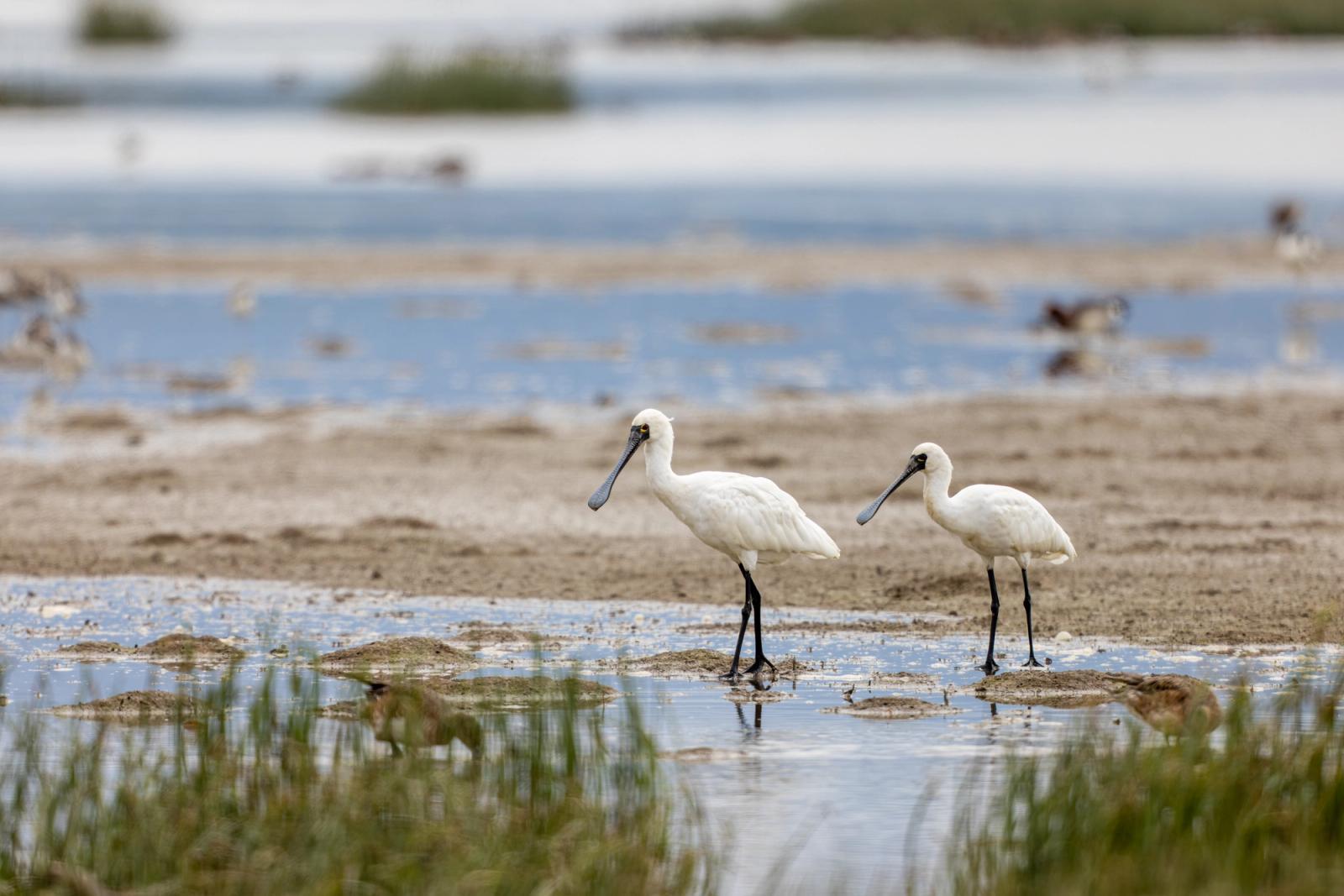
A three day winter census across East Asia counted 7,081 black-faced spoonbills in January 2025, up from about 400 birds in 1995. The IUCN has moved the species from Endangered to Vulnerable.
In 1995 a survey could find about 400 black-faced spoonbills in the world. Thirty years later, in January 2025, more than 200 counters worked across 11 wintering regions of East Asia and found 7,081 of them. On 18 June 2025 the IUCN Red List, the global register that ranks how close each species sits to extinction, moved the bird from Endangered to Vulnerable. BirdLife International, which prepares the bird assessments, attributes that downlisting, the move to a lower band of extinction risk, largely to successful conservation action.
How we know
The count comes from the annual Black-faced Spoonbill Census, coordinated by the Hong Kong Bird Watching Society, which surveys most of the species' non-breeding range over three days each January. In 2025 it ran from 17 to 19 January. Taiwan held the largest share with 4,169 birds, followed by mainland China with 1,671, Japan with 716, Deep Bay on the Hong Kong and Shenzhen border with 328, and Viet Nam with 112. The IUCN Red List assessment uses those totals but reports the population in a narrower unit: mature individuals, the birds known or thought to be capable of breeding. About 58 percent of the birds counted in Hong Kong's winter surveys are mature individuals, and applying that ratio to a total the assessors put at 6,500 to 7,500 gives 3,000 to 5,100.
Why it matters
The spoonbill breeds on a few islets off the Korean peninsula and winters on the tidal flats of the East Asian coast, the mud and sand the sea uncovers twice a day. Those flats have been drained and built on for decades, so a bird that depends on them is a direct measure of whether protecting them works. The species is now protected by law in China, Taiwan, both Koreas and Japan, an international action plan was published in 1995 and a second in 2010, and reserves cover many of the sites the birds actually use. That is the work behind the downlisting. The IUCN's companion assessment, the Green Status of Species, scores how far a species has recovered rather than how close it is to dying out, and it still rates the black-faced spoonbill Largely Depleted at 35 percent. A Green Status of 100 percent would mean the bird was back across the range it held before major human impact, viable in every part of it and performing its ecological role there. The species has been pulled back from the edge. Getting it the rest of the way is a separate task, and the wetlands it needs are still being lost.
A move to a lower risk band is not recovery. The IUCN counts only 3,000 to 5,100 birds old enough to breed, records a continuing decline in that number, and expects the population to start falling within one or two generations as coastal wetlands are drained, built on and covered with solar panels. Its separate recovery assessment rates the species Largely Depleted, 35 percent of the way to full recovery, and the Deep Bay wintering count fell 12.5 percent between 2024 and 2025.
How were the spoonbills counted?
The Hong Kong Bird Watching Society coordinates an annual census across most of the species' wintering range, held over three days each January. In 2025 it ran from 17 to 19 January and involved more than 200 experts and volunteers across 11 regions. Taiwan held 4,169 of the 7,081 birds found.
Why does the IUCN report a smaller population than the census?
The census counts every bird seen, while the IUCN measures a population by the animals capable of breeding. About 58 percent of the birds counted in Hong Kong's winter surveys are old enough to breed, and applying that ratio gives 3,000 to 5,100. The IUCN puts the total number of birds in any given year at 6,500 to 7,500.
What caused the recovery?
The IUCN attributes the increase largely to sustained conservation action. The bird is protected by law in China, Taiwan, both Koreas and Japan, several of its breeding and wintering sites sit inside protected areas, and international action plans have run since 1995. An annual census has tracked the population throughout.
Is the black-faced spoonbill safe now?
No. The IUCN still judges the species to face a high risk of extinction, records a continuing decline in the number of birds able to breed, and expects the population to begin falling as coastal wetlands are lost. Its recovery assessment rates the species Largely Depleted, 35 percent of the way to full recovery.
- IUCN Red List of Threatened Species, Platalea minor, The IUCN Red List of Threatened Species 2025: e.T22697568A154689773 Primary
- Hong Kong Bird Watching Society, Black-faced Spoonbill Global Population Exceeds 7,000, Deep Bay Decline Demands Urgent Attention
- NEASPEC (UN ESCAP East and North-East Asia Office), Black-faced Spoonbill Downgraded to Vulnerable: A milestone and continued commitment
One verified piece of progress, every other day.
Good news, checked against primary sources. Free.
Powered by Buttondown