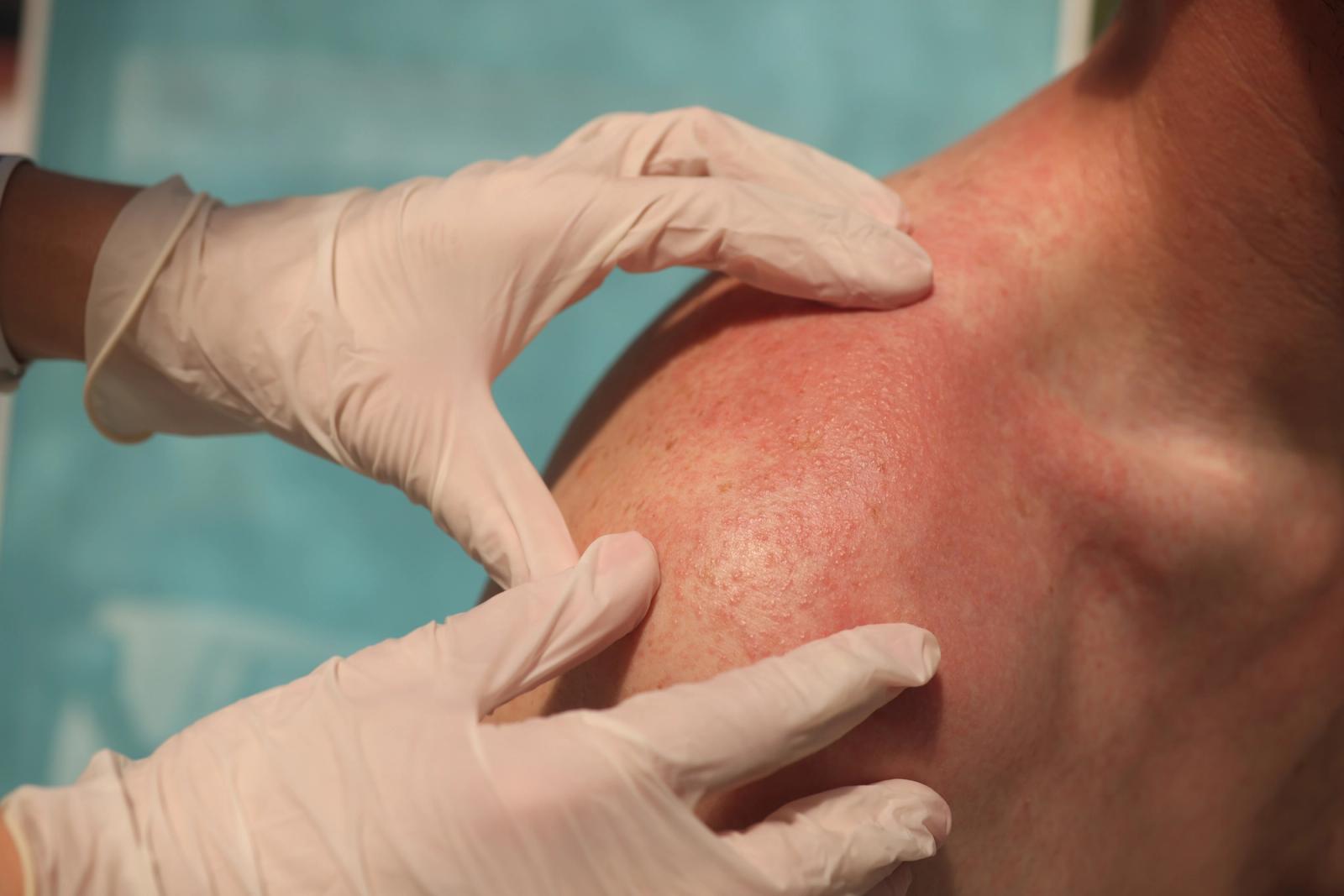
For decades, people with dermatomyositis have been treated with steroids and with drugs borrowed from other diseases. On 27 August the US Food and Drug Administration approved a once daily tablet aimed at this one. Among trial participants whose skin was worst affected, 45.7 percent reached clear or almost clear skin after a year, against 21.8 percent on placebo.
Dermatomyositis, a rare disease in which the immune system attacks a person's own muscles and skin, puts its rash where nobody can hide it: the eyelids, the knuckles, the neck and the chest. It itches, it scars, and for decades the treatment was steroids taken for years alongside drugs borrowed from other diseases and never designed for this one. On 27 August 2026 the US Food and Drug Administration approved brepocitinib, sold as Lisraya, the first oral medicine cleared to treat the disease itself. Among the trial patients whose skin was worst affected, 45.7 percent had clear or almost clear skin after a year on the higher dose, against 21.8 percent on a dummy tablet.
How we know
The approval rests on VALOR, a trial that ran at 90 centres in 20 countries between October 2022 and July 2025. It enrolled 241 adults, on average 50.6 years old and 78 percent of them women, and split them three ways: 30 mg of brepocitinib once a day, 15 mg, or placebo, for 52 weeks, with neither patients nor their doctors told which they were taking. The trial's main question, its primary endpoint, was a composite score tracking muscle strength, physical function, skin and overall disease activity, muscle enzymes, and how both doctor and patient rated the illness. The 30 mg dose beat placebo on it, and the FDA approved on that basis.
A second paper, published in JAMA Dermatology on 26 August 2026, reported what happened to the skin. Among the 155 participants who began with moderate or severe skin disease, 45.7 percent on 30 mg reached clear or almost clear skin at 52 weeks against 21.8 percent on placebo, and 43.5 percent reached what the trial counted as remission, meaning almost no measurable activity left in the skin, against 20.8 percent. Itch moved fastest. Among those who started with at least moderate itching, 54 percent had a meaningful reduction by week 4 on the drug against 9.5 percent on placebo, and by week 52 the figures were 74.0 percent and 33.3 percent. Steroid use fell as well: of the participants taking steroids by mouth at the start, 61.7 percent on 30 mg were down to 2.5 mg of prednisone a day or less by the end, against 34.4 percent on placebo, and 41.7 percent had stopped altogether against 23.4 percent.
The trial also held one thing deliberately still. Everyone stayed on the same background immune-suppressing drugs for the whole blinded year, including those who improved markedly, which the authors say was needed so the groups were compared on equal footing. It is not how the disease is managed in practice, where doctors reduce those drugs once things settle. Side effects of any kind were about as common in both groups, 90.1 percent against 91.1 percent, but serious infections were not: 9.9 percent on the 30 mg dose against 1.3 percent on placebo, mostly chest infections. The authors report that these were manageable with ordinary care and that most patients restarted the drug. Cancers, blood clots and heart events were more common in the placebo group. Nobody in the trial died.
Why it matters
Rare diseases are usually treated with whatever works for something else, and dermatomyositis has been treated that way for as long as it has been treated at all. Brepocitinib is a JAK inhibitor, a drug that blocks the enzymes relaying the immune system's inflammatory signals inside a cell, and it is the first medicine approved for this disease rather than adapted to it. Nikolay Nikolov, who directs immunology and inflammation review at the FDA, said patients had for too long relied on therapies meant for other conditions.
What changes day to day is mostly the steroids, which carry their own accumulating damage over the years people take them, and two in five participants came off them entirely. The skin matters more than the word cosmetic suggests: the rash sits on the face and hands, it itches badly, and it has been among the hardest parts of the disease to shift. An open extension of the trial is still running, and it is designed to show what a second year looks like when doctors can adjust the rest of a patient's treatment freely, which the main trial deliberately held fixed. Whether the drug reaches the people who need it, at a price they can meet, is the part no trial answers.
The skin figures come from a subgroup of a 241 person trial and were secondary endpoints, not the question the trial was built to answer, and the lower 15 mg dose did not deliver them. Serious infections, mostly pneumonia, reached 9.9 percent on the drug against 1.3 percent on placebo, and the class carries a boxed warning. This is a treatment taken indefinitely, not a cure.
What is dermatomyositis?
It is a rare autoimmune disease in which the immune system attacks a person's own muscles and skin. It causes progressive muscle weakness alongside distinctive rashes that are often long lasting, itchy and hard to cover. Until this approval there was no oral medicine cleared to treat it.
How well did the drug work on the skin?
Among the 155 trial participants who began with moderate or severe skin disease, 45.7 percent taking 30 mg reached clear or almost clear skin at 52 weeks, against 21.8 percent on placebo. Itch responded fastest, with 54 percent seeing a meaningful reduction by week 4 against 9.5 percent on placebo.
Does it get people off steroids?
Partly. Of the participants taking steroids by mouth at the start, 61.7 percent on the 30 mg dose were down to 2.5 mg of prednisone a day or less by the end of the year, against 34.4 percent on placebo. Some 41.7 percent had stopped altogether, against 23.4 percent.
What are the risks?
Serious infections, mostly respiratory, occurred in 9.9 percent of participants on the 30 mg dose against 1.3 percent on placebo. The drug carries a boxed warning for serious infections, death from any cause, cancers, serious heart and blood vessel events and blood clots, the standard warning for its drug class. Six percent of people on the drug stopped because of side effects, against 11 percent on placebo.
- JAMA Dermatology, Skin-Specific Outcomes of Brepocitinib in Patients With Dermatomyositis: Secondary Analysis of a Phase 3 Randomized Clinical Trial Primary
- US Food and Drug Administration, FDA Approves First Oral Drug Indicated to Treat Dermatomyositis in Adults Primary
- The American Journal of Managed Care, FDA Approves Brepocitinib as First Oral Drug for Dermatomyositis
Three verified stories, once a week.
Good news, checked against primary sources. Free.
Powered by Buttondown