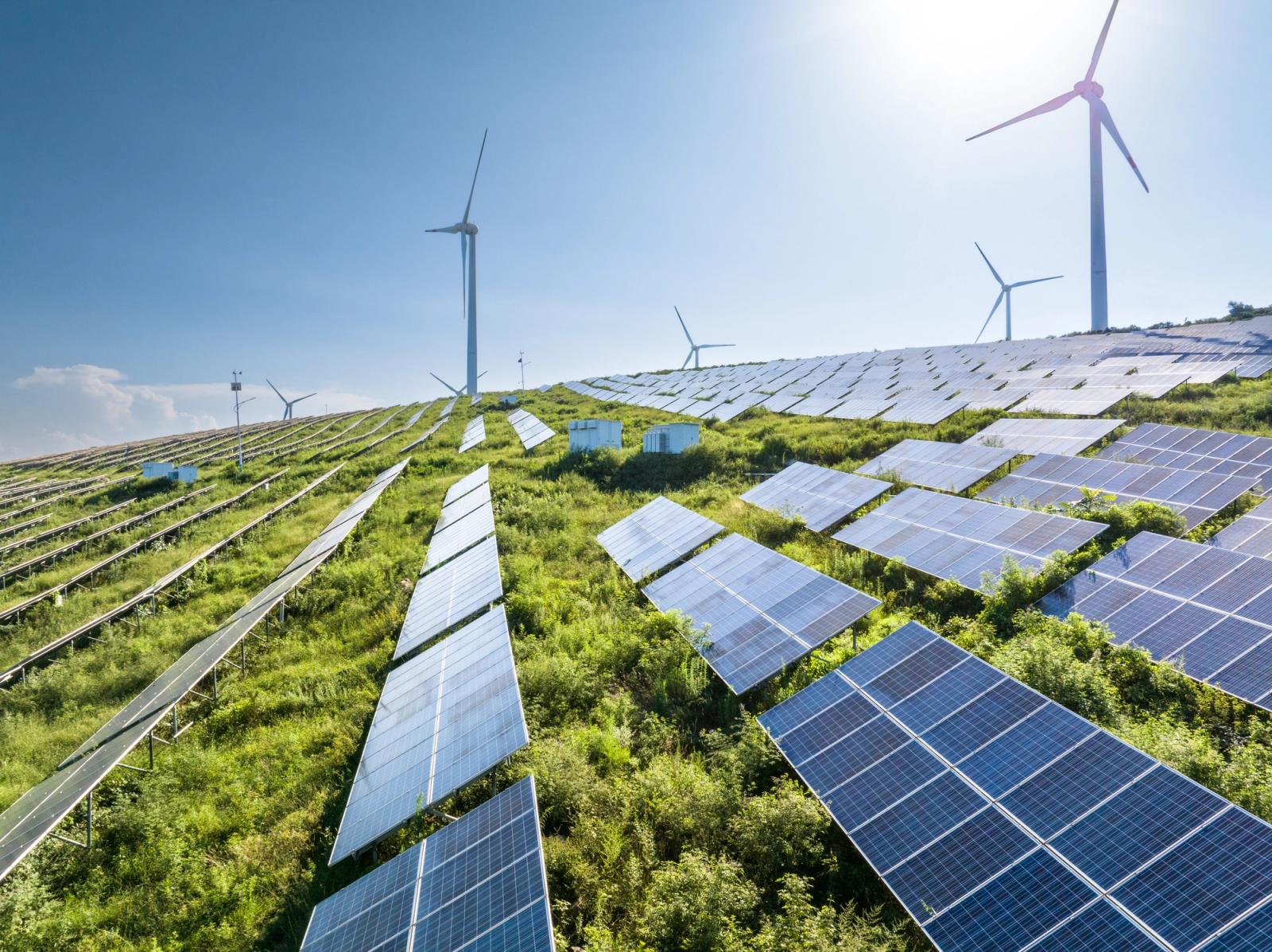
Coal supplied 49.7 percent of China's electricity from January to June 2026, the first half year below half in the world's largest power system, with renewables at about 40 percent.
Coal has supplied more than half of China's electricity in every half year the country has measured. In the first six months of 2026 it did not. Coal fired power stations generated 2.5 trillion kilowatt hours between January and June, 49.7 percent of everything the grid produced, and China's National Energy Administration announced the figure at its half year press conference in Beijing on 30 July. Renewables supplied about 40 percent. Wind and solar together passed 1.2 trillion kilowatt hours, roughly a quarter of the electricity the country used.
How we know
The numbers come from the administration's own half year briefing, the routine occasion on which China reports what it produced and used. Coal fired generation was 2.5 trillion kilowatt hours, which the administration put at 49.7 percent of total generation, and it named the crossing explicitly as the first half year in which coal's share fell below 50 percent. Two denominators sit behind the headline figures and the difference is worth holding onto: coal's 49.7 percent is a share of what China generated, while the quarter attributed to wind and solar is a share of what China consumed, so the two percentages are close cousins rather than the same measurement. Renewables at about four tenths is measured against generation again, and the administration noted that this came to more electricity than the country's service sector and all of its households used put together. Behind the generation figures sits the equipment. Wind and solar reached 1.95 billion kilowatts of installed capacity by the end of June, the maximum power those turbines and panels could deliver at once rather than the electricity they actually made, up 16.8 percent on a year earlier, and China's generating fleet as a whole passed 4 billion kilowatts. Raw coal production fell 1.7 percent against a high base a year before.
Why it matters
China uses more electricity than any other country, so what powers its grid sets a large part of the world's emissions arithmetic. The crossing did not arrive suddenly. Ember, the energy think tank, found that Chinese coal generation fell in absolute terms in 2025, by about 71 billion kilowatt hours, the first such drop since 2015, while wind and solar reached 22 percent of generation across that year and solar output alone grew 40 percent. Fossil fuels supplied 58 percent of Chinese electricity in 2025, down from about 62 percent in 2024. What decides whether the first half of 2026 becomes the shape of things is what gets built next, and the administration's investment figures point that way: spending on the grid rose 13.5 percent in the half year and spending on new forms of energy storage rose 74.3 percent, and between them those two things decide how much of that installed capacity a system can actually use. The milestone is a crossing point. Whether coal stays below half is a question about the next few years of building, not about the last six months.
A falling share is not a falling total. Coal fired plants still generated 2.5 trillion kilowatt hours in six months, and with electricity demand rising, China can burn more coal in absolute terms while coal's share of the mix drops. The 49.7 percent is a half year average, and half year figures move with rainfall for hydropower and with seasonal demand, so the share can cross back above 50 percent later in the year. China's stated aim is for coal consumption to peak no later than 2030, which is an intention rather than a result. This is a crossing point, not a settled decline.
Does this mean China is burning less coal?
Not on its own. The 49.7 percent is coal's share of generation, and coal fired plants still produced 2.5 trillion kilowatt hours in the half year. Ember found that Chinese coal generation did fall in absolute terms in 2025, by about 71 billion kilowatt hours, the first drop since 2015, but a share can fall while a total rises when demand is growing.
Could coal go back above half?
Yes. This is a half year figure, and half year shares move with rainfall for hydropower and with seasonal demand. The National Energy Administration presented the number as one stage in a long running shift to non fossil generation rather than as a settled level.
How much of the electricity did wind and solar supply?
Wind and solar generated more than 1.2 trillion kilowatt hours between January and June, about a quarter of the electricity China used. Their combined capacity reached 1.95 billion kilowatts by the end of June, up 16.8 percent on a year earlier. Renewables as a whole supplied about 40 percent of generation.
Where do these figures come from?
China's National Energy Administration published them at a press conference on 30 July 2026 covering the first half of the year, and Bloomberg reported the same figures from the same briefing. They are official government statistics rather than an independent estimate.
- National Energy Administration of China, State press conference on the national energy situation in the first half of 2026 Primary
- Bloomberg, China Crosses Energy Milestone as Coal Falls Below 50% of Power
- Ember, China, Energy Trends
- The Standard, China generates less than half of its electricity from coal for the first time
Three verified stories, once a week.
Good news, checked against primary sources. Free.
Powered by Buttondown