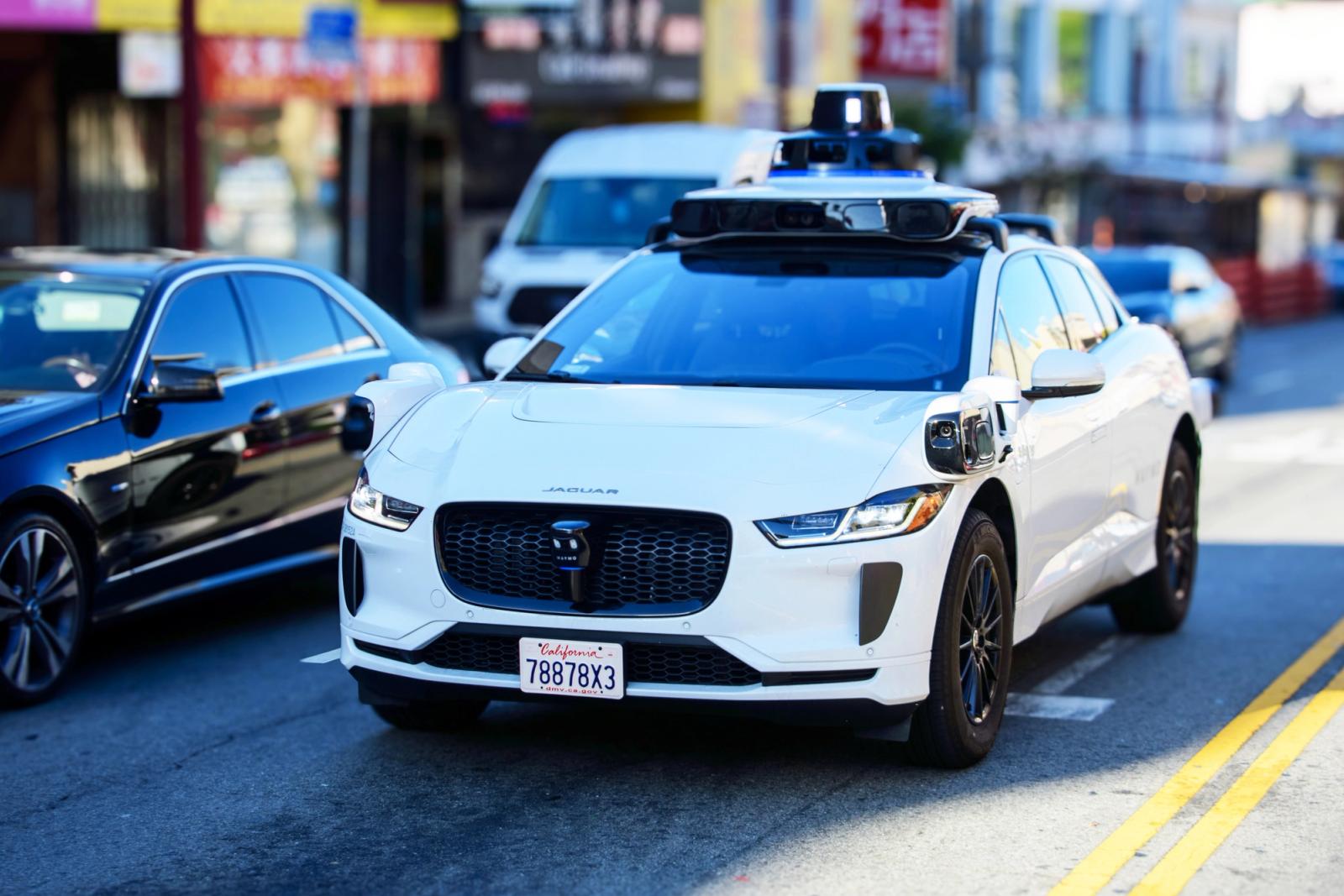
A study of robotaxis in four US cities found far fewer crashes that hurt someone than human drivers on the same streets. A separate analysis by a road safety institute has since found almost the same figure.
Every car on an American road is steered by a person who can be impaired, drowsy or distracted. In four US cities, some are not. Waymo's robotaxis carry passengers through Phoenix, San Francisco, Los Angeles and Austin with nobody behind the wheel, and across 56.7 million miles of that driving they were involved in 79 percent fewer crashes in which someone was reported injured than human drivers on the same kinds of roads, in the same places.
The cars run at Level 4 on the six-step scale of driving automation, which means the car does all of the driving, with no human supervising, but only inside a limited service area. That is a different machine from the systems on sale to the public, such as General Motors' SuperCruise or Ford's BlueCruise, which can steer and brake but need a driver alert and ready to take over at all times.
Crashes serious enough to set off an airbag fell by 81 percent. Set against the rate human drivers would have been expected to reach over the same distance, the driverless fleet was in 181 fewer injury crashes, 78 fewer airbag crashes and 11 fewer crashes in which someone was suspected to have been seriously injured or killed.
How we know
The figures come from a peer-reviewed paper in the journal Traffic Injury Prevention, published in May 2025 and written by six researchers who all work for Waymo. They took every crash the company had reported to the National Highway Traffic Safety Administration under its Standing General Order, a federal rule that since 2021 has obliged companies running automated vehicles to report their crashes. They set those against police-reported crash records and state mileage figures for human drivers, matched to the same vehicle types, road types and counties. The driverless miles ran to the end of January 2025: 31.2 million in Phoenix, 18.3 million in San Francisco, 6.4 million in Los Angeles and 0.8 million in Austin.
For injury crashes, the study's confidence interval, the range the true figure very likely falls within, runs from 71 to 85 percent fewer. The drops were statistically significant, meaning unlikely to be down to chance, for crashes involving pedestrians (92 percent fewer), cyclists (82 percent) and motorcyclists (82 percent). The biggest single fall came at junctions, where injury crashes between two vehicles at an intersection dropped by 96 percent.
A second team has since checked the pattern from outside the company. In July 2026 the Insurance Institute for Highway Safety (IIHS) published its own analysis of crash reports filed from 2021 to 2024, comparing about 50 million Waymo driverless miles with about 222 billion miles driven by people in the same places over the same period. Its researchers first stripped out duplicate records, incidents where the automation was not engaged and minor scrapes a person would never report to the police. On what remained, Waymo's cars were in 68 percent fewer police-reportable crashes and 81 percent fewer injury crashes per mile.
Why it matters
The crashes the robotaxis avoided most are the ones that hurt people most. Earlier research cited in the Waymo paper found that collisions with pedestrians and motorcyclists make up 36 percent and 13 percent of fatal crashes but less than 1 percent each of minor-injury ones, while intersection crashes account for about a quarter of both. Those are the categories where the driverless rate fell furthest.
The strongest claims are also the thinnest. The paper estimates 85 percent fewer crashes with a suspected serious injury or death, but that rests on two crashes, and in both the Waymo was not part of the first impact in the crash; in one it was standing still in traffic. Its confidence interval runs from 39 to 99 percent, and the Los Angeles results on their own were not statistically significant, because the fleet had driven too few miles there.
IIHS's president, David Harkey, said the results show that on a limited scale these cars are safer than human drivers, and then named the gap. Companies must report their crashes but not the miles they drive, and only Waymo publishes its driverless mileage, so the safety of every other Level 4 fleet is out of view. In his words, the present reporting system is not good enough to keep watching as the fleets grow. Two readings, one from outside the company, now point the same way. Whether the record holds at scale depends on building the reporting that can keep checking it.
The journal study was written by Waymo employees, using Waymo's own mileage, and its serious-injury estimate rests on only two crashes. In the Insurance Institute for Highway Safety's separate analysis, Austin came out 4 percent worse than human drivers, on a small sample. Other companies need not report driverless miles, so they cannot yet be compared, and the institute says US crash reporting is not good enough to track a large expansion.
Who did the research, and can it be trusted?
All six authors of the journal paper work for Waymo, and its mileage figures come from the company. The crashes, though, come from a federal reporting system, and the Insurance Institute for Highway Safety, working separately, found a similar 81 percent drop in injury crashes per mile.
Are these cars fully self-driving?
Within limits. The car does all of the driving with no human supervising, but only within a limited service area. The driver assistance systems sold to the public, such as SuperCruise or BlueCruise, still need a human ready to take over at all times.
Did Waymo do better than people in every city?
Not in every city. In the Insurance Institute for Highway Safety's analysis Waymo's crash rate was 76 percent lower than human drivers' in Phoenix, 71 percent lower in Los Angeles and 35 percent lower in San Francisco, but 4 percent higher in Austin, where the sample was relatively small.
Why can't other robotaxi companies be compared?
Companies must report their crashes to federal regulators but are not required to report how many miles they drive. Waymo provides its driverless mileage voluntarily and other companies do not, so the institute says it is impossible to know how often their vehicles crash.
Three verified stories, once a week.
Good news, checked against primary sources. Free.
Powered by Buttondown