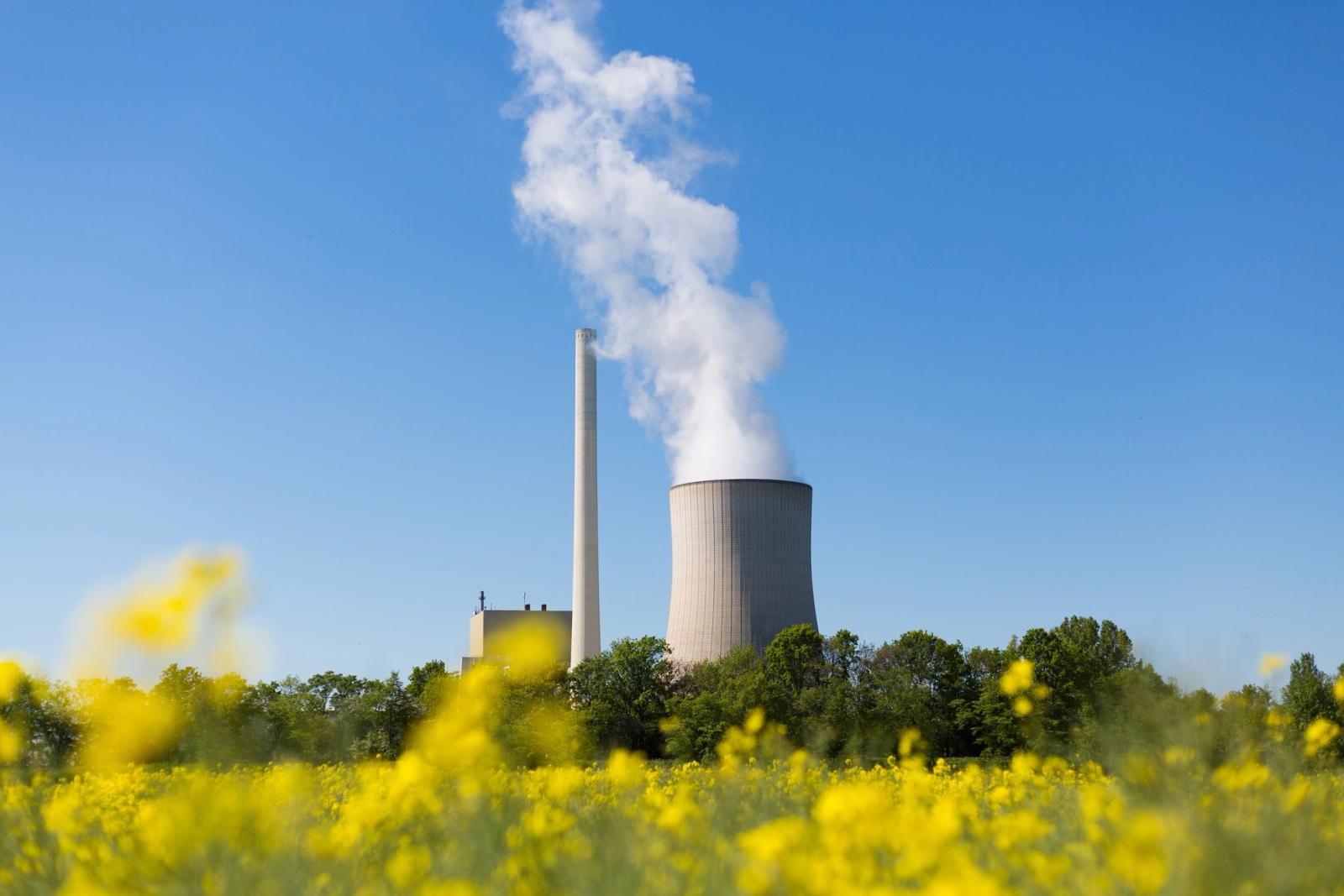
Coal's share of EU power fell further below a tenth, and by one independent count wind and solar together outproduced every fossil fuel for the first time. Gas filled part of the gap left by a weak year for hydropower.
In June 2025, for the first time, the sun was the European Union's largest source of electricity for a whole month. Across the year, coal went the other way. Hard coal and brown coal, the lower-energy kind burned almost only for power and heat, mostly near where it is mined, together made 9.2 percent of EU electricity in 2025, Eurostat reports. That is the lowest share on record. In 1990 they made more than a third.
The fall has been long and mostly steady. Coal's share dropped to 30.4 percent by 2000 and kept falling, with brief rebounds in 2011 to 2012 and 2021 to 2022, before slipping below a tenth for the first time in 2024. In 1990, hard coal and brown coal were the second and third largest sources of EU power. By 2025 they had fallen to seventh and sixth, overtaken by nuclear in 1994, gas in 2019, hydro and wind in 2023, and solar in 2024.
Brown coal made 5.5 percent of EU electricity in 2025 and hard coal 3.7 percent. Their use is at historic lows by weight as well as by share: the EU is estimated to have burned about 107 million tonnes of hard coal and 184 million tonnes of brown coal in 2025, each the lowest on record. Hard coal is now mined in only two EU countries, Poland and Czechia, and EU production of it is 84 percent below its 1990 level.
Country by country, coal is leaving. Portugal stopped burning hard coal for electricity in 2021, and Slovakia stopped mining brown coal in 2024, leaving eight EU countries that still do. In 2025 Ireland stopped burning coal for power in June, and Finland effectively ended coal power in April, years ahead of its 2029 deadline. The energy analysts Ember count 19 EU countries that now get no electricity, or less than 5 percent, from coal, two more than a year earlier. Germany and Poland, both at all-time lows, still produced more than 74 percent of the EU's coal power between them.
How we know
The coal figures come from Eurostat, the EU's statistics office, which published them on 13 August 2026, measured as gross electricity production. Its June release on 2025 energy supply put renewables at 47.2 percent of EU electricity, fossil fuels at 29.6 percent and nuclear at 23.2 percent. Eurostat's coal statistics page sets out what counts as each kind of coal and tracks consumption by weight.
Ember's European Electricity Review 2026, an independent count, reaches the same 9.2 percent for coal. It also finds that wind and solar made 30.1 percent of EU electricity, or 841 terawatt hours, a terawatt hour being a billion kilowatt hours, against 29.0 percent, or 809 terawatt hours, for all fossil fuels combined. That makes 2025 the first year wind and solar together outproduced them. Ember's shares differ slightly from Eurostat's, which is why that milestone is credited to Ember here.
Why it matters
Solar did much of the work. EU solar output rose by a fifth in 2025, to a record 369 terawatt hours, more than double its 2020 level, and Hungary, Cyprus, Greece, Spain and the Netherlands each got more than a fifth of their power from the sun. Seven of the world's ten countries with the highest solar shares are now in the EU. Wind and solar beat all fossil fuels in 14 of the 27 member states, the Netherlands and Croatia for the first time.
The year was not clean all the way down. Hydropower fell, at home and abroad, and gas filled the gap: EU gas generation rose 8 percent, to 432 terawatt hours, and its import bill for power rose 16 percent, to 32 billion euros. In Germany gas replaced hydro as the fuel switched on when wind and sun fall short, and in Spain more gas was run to stabilise the grid after the Iberian blackout of April 2025, a practice rule changes approved that June are expected to reduce from January 2026. Even so, gas generation stayed 18 percent below its 2019 peak.
Coal's exit from European power is no longer a forecast; it is in the statistics. The open question is how fast clean power can take over the hours that gas still covers, so that the next record low belongs to fossil power as a whole.
Coal's record low did not mean less fossil power overall. Hydropower fell in 2025, gas generation rose about 8 percent, and Eurostat counts fossil electricity up 3.2 percent on 2024. The milestone of wind and solar beating fossil fuels is Ember's count, and Eurostat's shares differ slightly. Eight EU countries still mine lower-energy coal, and Germany and Poland still produce most of the EU's coal power.
Did fossil fuel power fall in 2025?
No. Hydropower output fell, and gas generation rose about 8 percent to fill the gap, so Eurostat counts fossil electricity up 3.2 percent on 2024 even as coal fell to a record low share.
Which countries still rely on coal?
Germany and Poland produced more than 74 percent of the EU's coal power in 2025, though both hit all-time lows. Eight EU countries still mine the lower-energy coal used mainly in power stations, while 19 now get none or less than 5 percent of their electricity from coal.
Is solar now Europe's biggest source of power?
Not across the year: in 2025 wind made 16.9 percent of EU electricity and solar a little over 13 percent. But in June 2025 solar was the EU's largest source for the first month ever, and its output rose by a fifth over the year.
Three verified stories, once a week.
Good news, checked against primary sources. Free.
Powered by Buttondown