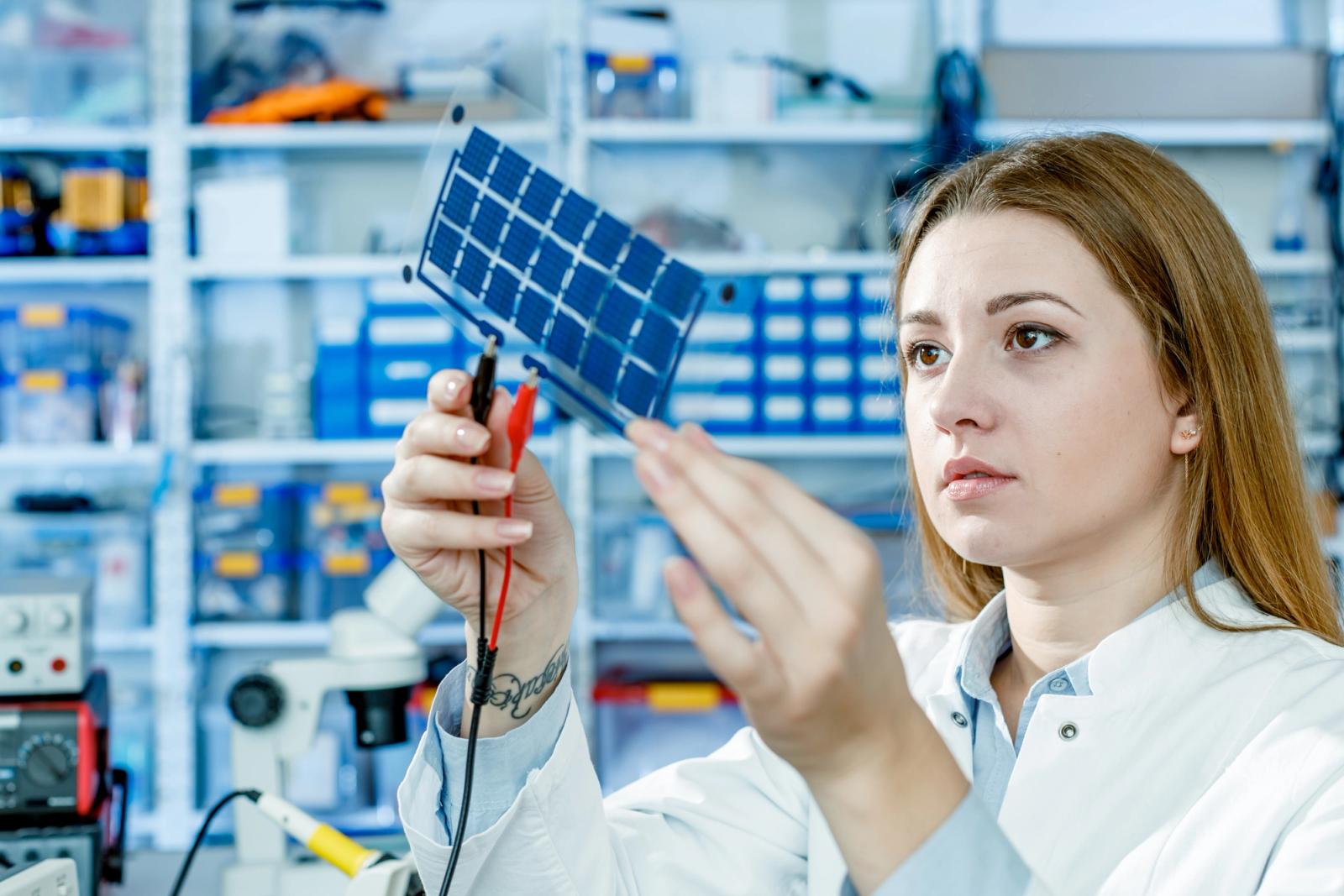
A flexible perovskite-on-silicon cell hit 33.6 percent certified efficiency in the lab, far above the 20 to 25 percent of today's rigid rooftop panels.
Most solar panels are rigid sheets of glass and silicon. A flexible cell that could be rolled onto curved roofs, vehicles or tents has long been held back by low efficiency. Researchers have now made a bendable perovskite-on-silicon cell that converts 33.6 percent of the sunlight hitting it into electricity, a certified record for its type and well above the 20 to 25 percent typical of rigid rooftop panels.
How we know
The result was published in the journal Nature in late 2025, and the efficiency was independently certified, the standard check in the field. The cell reached a record voltage for its class and kept 91 percent of its performance after 5,000 bending cycles. It sits just below the 34.85 percent record held by a rigid tandem cell.
Why it matters
A flexible cell that matches rigid ones in the lab could open solar power to surfaces that panels cannot cover today, and lighter, bendable modules are cheaper to ship and install. It is a marker of how fast perovskite tandem technology, the leading candidate to succeed plain silicon, is improving.
This is a small laboratory cell, not a full-size module or a product on sale, and efficiencies always drop when a cell is scaled up to a panel. Stability was measured in thousands of hours, whereas field panels must last 20 to 25 years, so real-world lifetime is unproven. Perovskites remain sensitive to moisture and heat, and many formulations contain lead, which raises handling and disposal questions.
What did the researchers achieve?
They built a bendable perovskite-on-silicon tandem cell with a certified efficiency of 33.6 percent, a record for a flexible cell of this type. That is well above the 20 to 25 percent typical of rigid rooftop panels, and just below the 34.85 percent record held by a rigid tandem cell.
Does it keep working after being bent?
In testing, the cell retained 91 percent of its initial efficiency after 5,000 bending cycles. It also reached an open-circuit voltage of 2.015 volts, a record for its class, which is one of the reasons the efficiency is so high.
Can you buy panels like this yet?
No. This is a small laboratory cell rather than a full-size module, and efficiency always drops when a cell is scaled up to a panel. Stability was measured in thousands of hours, whereas field panels must last 20 to 25 years, so real-world lifetime is still unproven.
Three verified stories, once a week.
Good news, checked against primary sources. Free.
Powered by Buttondown