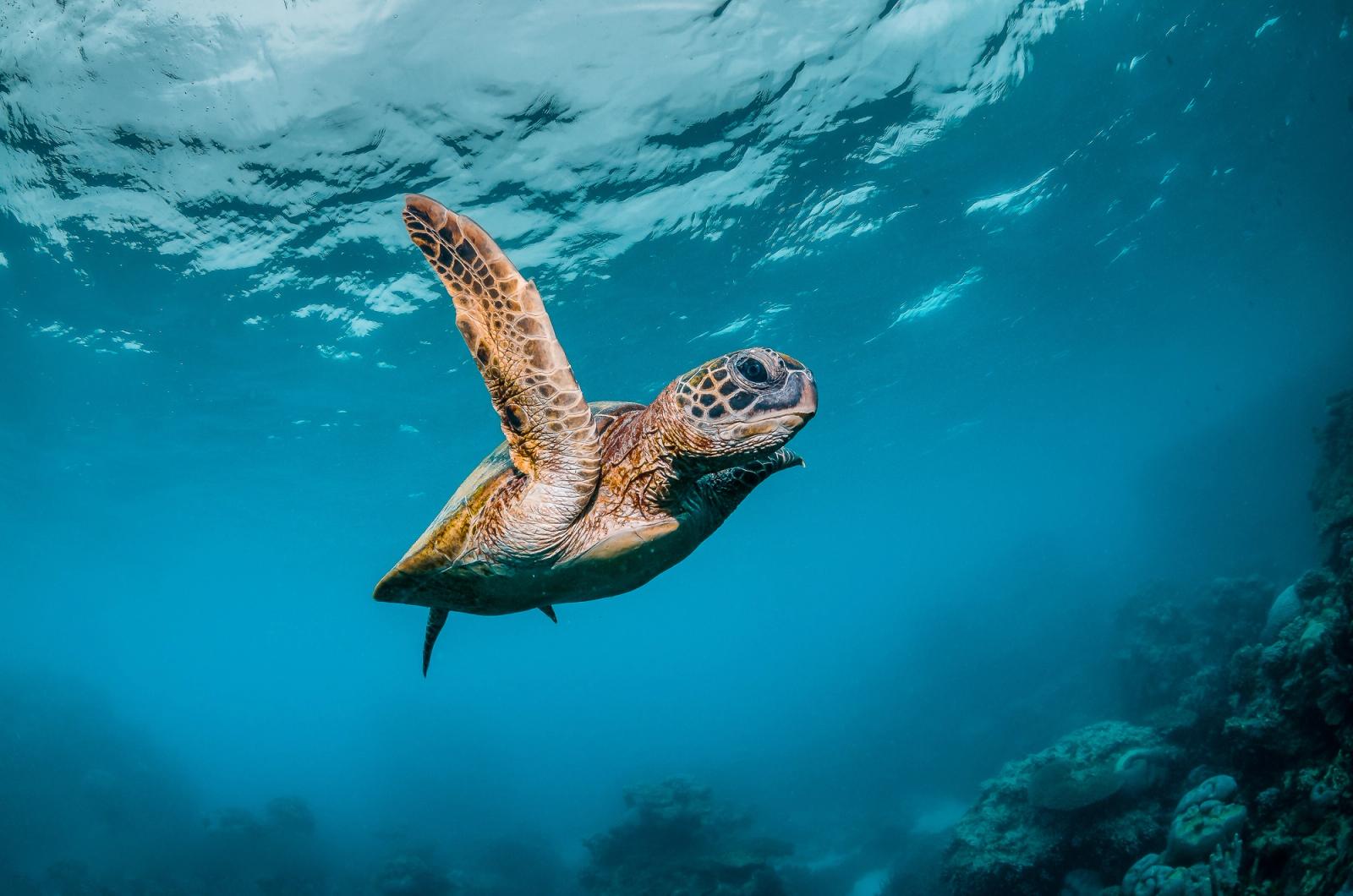
After decades of protection, one of the ocean's most familiar animals has recovered enough to move two full steps back from the brink.
For most of the last half century, the green sea turtle has been a symbol of what we stand to lose. In October 2025 it became something rarer: a symbol of what patience can win back. The IUCN moved the species from Endangered all the way to Least Concern, skipping two rungs of the extinction ladder in a single assessment, on the back of a 28 percent rise in the global nesting population since the 1970s.
How we know
The reclassification is the work of the IUCN Red List, the world's most authoritative record of extinction risk, drawing on decades of nesting counts from beaches around the world. The recovery itself is the sum of unglamorous, long running work: protecting nesting beaches, banning the trade in turtle shell and meat, and fitting fishing gear with escape hatches so fewer turtles drown as bycatch. In the Seychelles, the number of eggs laid each year has risen roughly fivefold.
Why it matters
Green turtles graze seagrass meadows that store carbon and shelter young fish, so their recovery ripples outward through whole coastal ecosystems. Four of five regional populations are now growing. The lesson is simple and encouraging: give a long lived animal room and time, and it often takes them.
Least Concern is a global average, and it hides real trouble. Four of the eleven regional groups the IUCN tracks are still declining, and some Indian Ocean populations remain Vulnerable. Green turtles are still far below their historic numbers, and a warming climate skews hatchling sex ratios female and eats away at the beaches they nest on. The honest way to read this is not saved but saveable, and being saved.
How was the recovery measured?
The reclassification comes from the IUCN Red List, which draws on decades of nesting counts from beaches around the world. Those counts show the global nesting population up 28 percent since the 1970s, enough for the IUCN to move the green sea turtle from Endangered to Least Concern in October 2025, skipping two rungs in a single assessment.
What brought the turtles back?
The recovery is the sum of long running work: protecting nesting beaches, banning the trade in turtle shell and meat, and fitting fishing gear with escape hatches so fewer turtles drown as bycatch. In the Seychelles, the number of eggs laid each year has risen roughly fivefold.
Why does the recovery matter beyond the species?
Green turtles graze seagrass meadows that store carbon and shelter young fish, so their recovery ripples outward through whole coastal ecosystems. Four of five regional populations are now growing.
What is not solved yet?
Least Concern is a global average that hides real trouble. Four of the eleven regional groups the IUCN tracks are still declining, some Indian Ocean populations remain Vulnerable, and numbers are still far below historic levels. A warming climate also skews hatchling sex ratios female and erodes the beaches they nest on.
Three verified stories, once a week.
Good news, checked against primary sources. Free.
Powered by Buttondown