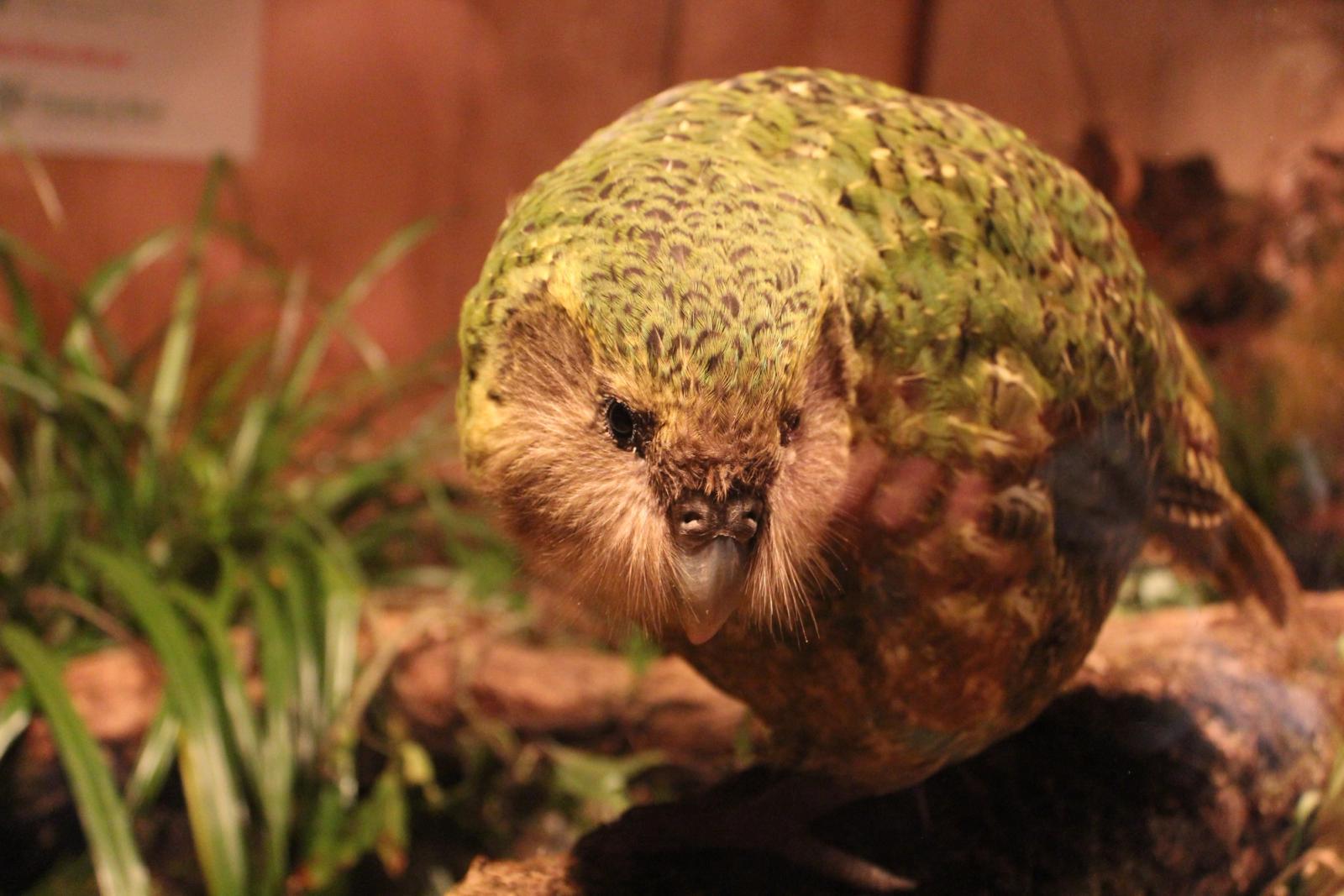
Ninety chicks from New Zealand's 2026 breeding season joined the official kākāpō count on 1 September, taking the critically endangered night parrot from 235 birds to 325. When recovery began in 1995 there were 51.
In 1995 there were 51 kākāpō left alive: 31 males and 20 females. On 1 September 2026 New Zealand's Department of Conservation added 90 chicks to the official count, and the population of this critically endangered night parrot now stands at 325 birds, its highest since recovery began.
The chicks come from the 2026 breeding season, the biggest on record. A young kākāpō joins the tally only once it reaches 150 days old, the age at which it has fledged, or left the nest, and is considered independent. The youngest surviving chick has now passed that mark, so the season's surviving chicks were added together, taking the count from 235 to 325.
Ninety chicks in one season is a record. "In the early years of recovery, it took 16 years to produce that many chicks," says Deidre Vercoe, who runs operations for the department's Kākāpō Recovery Programme. The department says the population may not have been above 300 birds for as long as 75 years.
How we know
The count is the department's own. Every kākāpō wears a small backpack radio transmitter that lets rangers track its location and activity, and every adult bird has a name. The birds breed in three populations: on Whenua Hou, or Codfish Island, near Rakiura, or Stewart Island, and on Pukenui, or Anchor Island, and Te Kāhaku, or Chalky Island, in Fiordland. The department announced the new total on 1 September 2026, and RNZ reported the season's figures from the programme's staff.
RNZ's breakdown runs like this. Seventy-nine females nested and laid 258 eggs. From those, 106 chicks hatched and 90 reached 150 days. Forty-eight females produced living chicks and 32 males fathered them. Three four-year-old females bred for the first time, the youngest ever to do so.
The programme has had to work against low genetic diversity, too little variety in the birds' genes, which the department links to infertility and poor hatching success. Ten of this season's chicks were conceived by artificial insemination, a technique the team uses to raise egg fertility and to pair birds whose genes are a good match. Through it, Ralph, one of the original males from Rakiura, became a father for the first time.
Kākāpō do not breed every year. Breeding is triggered by masting, the years when forest trees such as rimu produce a heavy crop of fruit all at once, and RNZ reports that the birds breed only every two to four years. This year the rimu fruited heavily on the two Fiordland islands, and mothers there needed no extra food. On Whenua Hou the rimu failed to ripen, so females there were still given supplementary food. Only two chicks, both of which had needed medical treatment, were hand-reared. The rest were raised by their mothers.
Why it matters
Numbers are only half the story. For three decades kākāpō conservation has leaned on intensive management, such as extra food for breeding females and hand-rearing chicks. This season the programme deliberately stepped back, making fewer egg and chick checks by relying on data from remote nest technology, and cutting back on supplementary feeding. "Our focus is increasingly on determining where intensive intervention is still needed," says Tāne Davis, Te Rūnanga o Ngāi Tahu's representative on the Kākāpō Recovery Group. Ngāi Tahu has worked with the department on the programme since 1995.
One small change marks the shift. Many of this year's chicks will be named on the anniversary of their hatching, but a few will stay unnamed, the first unnamed kākāpō of the modern recovery. The department calls it a sign of a more natural future for the species, in which birds are no longer all individually managed.
The next test may come soon. Andrew Digby, the programme's science advisor, says the temperature difference between summers gives about two years of warning of a masting year, and it points to another breeding season in 2028. The birds will need room. Their islands are already full, and Digby says the programme needs another breeding site after that season. Davis has his sights on a predator-free Rakiura: all but one of the founders, the birds the modern population descends from, came from there. Whether their descendants can one day go home depends on the habitat people make safe for them.
The kākāpō is still critically endangered, and the Department of Conservation says there is a long road of recovery ahead. Low genetic diversity still causes infertility and poor hatching success. The islands the birds live on are already full, so further growth depends on finding new predator-free breeding sites. The next breeding season, expected in 2028, is a forecast rather than a certainty.
Why does a chick only count once it is 150 days old?
The Department of Conservation adds young kākāpō to the official population at 150 days, when they have fledged and are considered independent. The 2026 chicks were added together on 1 September 2026, once the youngest surviving chick passed that age.
Why don't kākāpō breed every year?
Kākāpō breeding is triggered by the heavy, intermittent fruiting of forest trees such as rimu. RNZ reports that the birds breed only every two to four years, and the last two seasons were four years apart. The ripening fruit also feeds mothers as they raise their chicks.
When is the next breeding season?
The programme expects the next one in 2028. Its science advisor, Andrew Digby, says temperature differences between summers give about two years of warning of heavy rimu fruiting, and they point to 2028. That is a forecast, not a certainty.
What is still holding the recovery back?
Low genetic diversity causes infertility and poor hatching success, and the species remains critically endangered. The islands the birds live on are already full, so the programme needs new predator-free breeding sites. Tāne Davis of Ngāi Tahu hopes Rakiura, where all but one of the founding birds came from, can one day be made safe for their return.
Three verified stories, once a week.
Good news, checked against primary sources. Free.
Powered by Buttondown