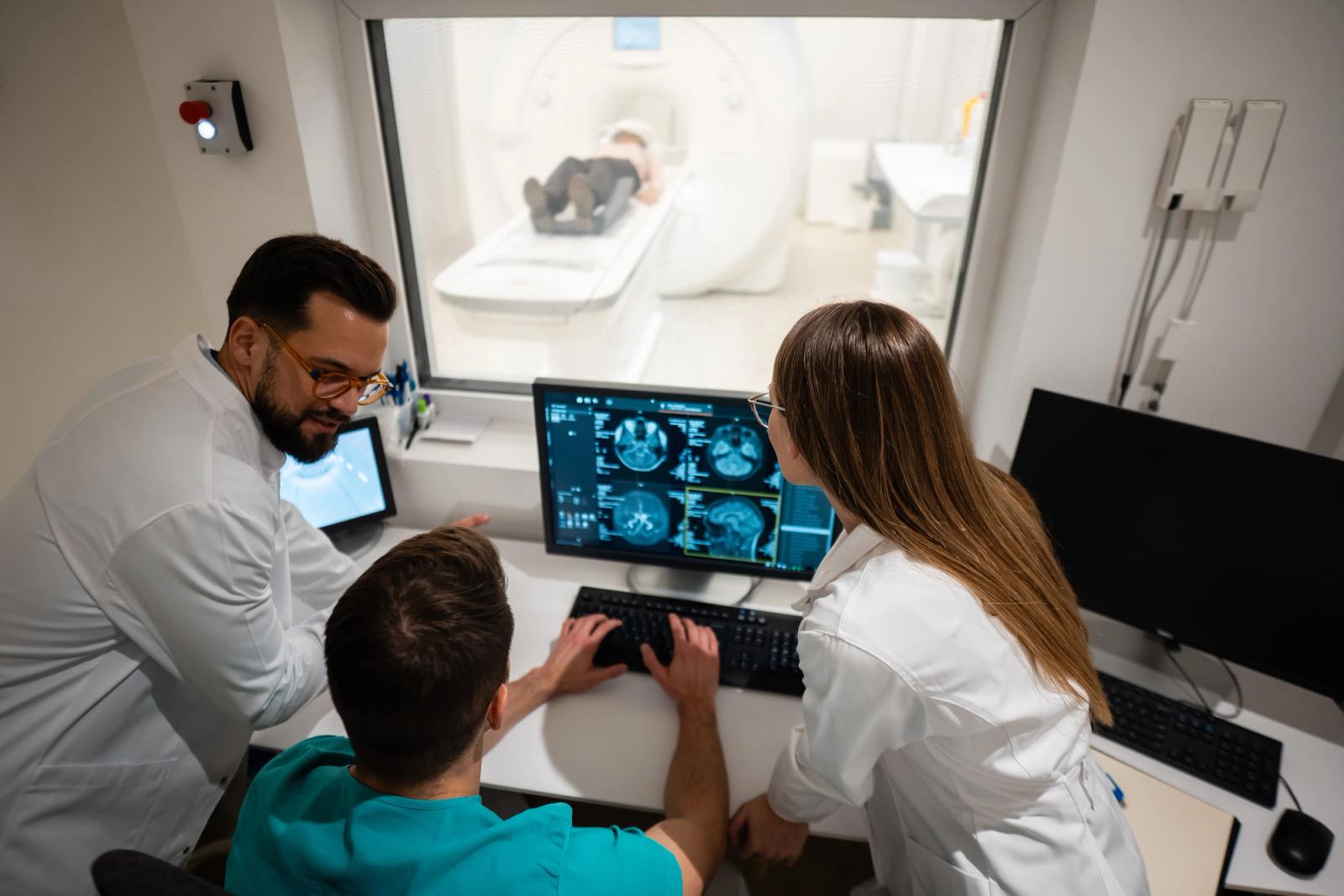
At 26 NHS hospitals that adopted AI software to read brain scans, the share of stroke patients who had a clot pulled out rose from 2.3 to 4.6 percent, and patients who needed moving to a specialist centre left about an hour sooner.
In the 14 months to February 2020, 2.3 percent of the stroke patients admitted to 26 hospitals in England had a blood clot pulled out of their brain. In the same 14 months three years later, the figure was 4.6 percent. Most strokes are ischaemic strokes, in which a clot blocks the blood supply to part of the brain, and when that clot sits in one of the brain's large arteries the standard treatment is a thrombectomy: a specialist threads a thin tube up from an artery in the thigh and draws the clot out. What changed at these hospitals in between was a piece of software. Each began running Brainomix 360 Stroke, an artificial intelligence tool that reads brain scans as they are taken and flags the signs of a major stroke within minutes. Across the rest of England's stroke hospitals, the rate rose over the same years, but by less, from 1.6 percent to 2.6 percent.
How we know
The figures come from a study published in The Lancet Digital Health in December 2025, by Kiruba Nagaratnam, Ain Neuhaus and colleagues. It used England's national stroke audit, a register of every patient aged 16 or over admitted to an NHS hospital with a stroke, and covered all 107 hospitals in England that admit acute stroke patients from 2019 to 2023: 452,952 patients in all. The 26 hospitals that adopted the software, six specialist centres and 20 local ones in four regional networks, were compared before and after it arrived, against the 81 that did not take part. It is an observational study, which means it followed what happened as hospitals adopted the tool rather than assigning patients to it by chance. Within the 26 hospitals, the researchers also compared patients whose scans were read with AI support against those whose scans were not: 5.9 percent of the first group had a thrombectomy, against 3.4 percent of the second. For the 747 patients who arrived at a local hospital and had to be moved to a specialist centre for the procedure, the median time between arriving and leaving was 128 minutes with AI support and 192 minutes without. Patients read with AI support were also about twice as likely to be given a clot-dissolving drug, 17.7 percent against 9.0 percent. NHS England, which funded the evaluation, published the same figures alongside the study.
Why it matters
Nearly three in four stroke patients in England first reach their nearest hospital that can give a clot-dissolving drug, most often a primary stroke centre: a local unit that cannot perform a thrombectomy and usually has no specialist in reading brain scans on hand. The patients who need the procedure must be recognised and sent on to a comprehensive stroke centre, the larger units that can do it, and every minute of that journey counts. That handover is where the study saw the strongest link between the software and treatment, and it is where the software also helps in a simpler way, by letting the local team and the specialist centre look at the same images at the same moment. The gap it works on is wide. In 2024 the national thrombectomy rate in England was 3.9 percent, against an estimated 15 percent of stroke patients who could be eligible. The NHS rolled AI scan reading out to every stroke centre in England in the summer of 2024. Whether the gains seen in 26 hospitals hold across all of them, and whether they show up as more people living independently months after a stroke, is the question the coming years of national data can answer.
This is an observational study, so it shows an association, not proof that the software caused the rise. Hospitals outside the study improved too, and 69 percent of them took up AI tools of their own. The gain in patients leaving hospital with no more than slight disability was small, 47.1 against 45.6 percent, and deaths in hospital did not change. Four authors work for the software maker and three others consult for it.
Does the AI decide who gets treated?
No. The software reads brain scans as they are taken and highlights the signs of a major stroke, and the doctors make the treatment decision. It also lets the team at a local hospital and the specialists at a larger centre see the same images at once, which can speed up the decision to transfer a patient.
Did the software save lives?
The study cannot show that. Deaths in hospital were the same, 10.5 percent, whether or not scans were read with AI support. Slightly more patients left hospital with no more than slight disability, 47.1 against 45.6 percent, and outcomes months later were not available.
Why did the hospitals without the software improve as well?
Stroke care was changing anyway, with treatment offered to more patients and over longer time windows. Many of those hospitals also took up AI tools of their own during the study, 69 percent of them by the end, which may explain part of their rise.
Is AI scan reading now used across England?
Yes. NHS England says AI tools to support the reading of stroke scans were rolled out to all stroke centres in England in the summer of 2024. The study covers the years before that national rollout, when 26 hospitals were using one tool, Brainomix 360 Stroke.
- The Lancet Digital Health, Artificial intelligence imaging decision support for acute stroke treatment in England: a prospective observational study (Nagaratnam, Neuhaus et al.) Primary
- NHS England, 'Life-changing' AI support helping stroke patients get a second chance
- HealthManagement.org, AI boosts stroke thrombectomy access
Three verified stories, once a week.
Good news, checked against primary sources. Free.
Powered by Buttondown