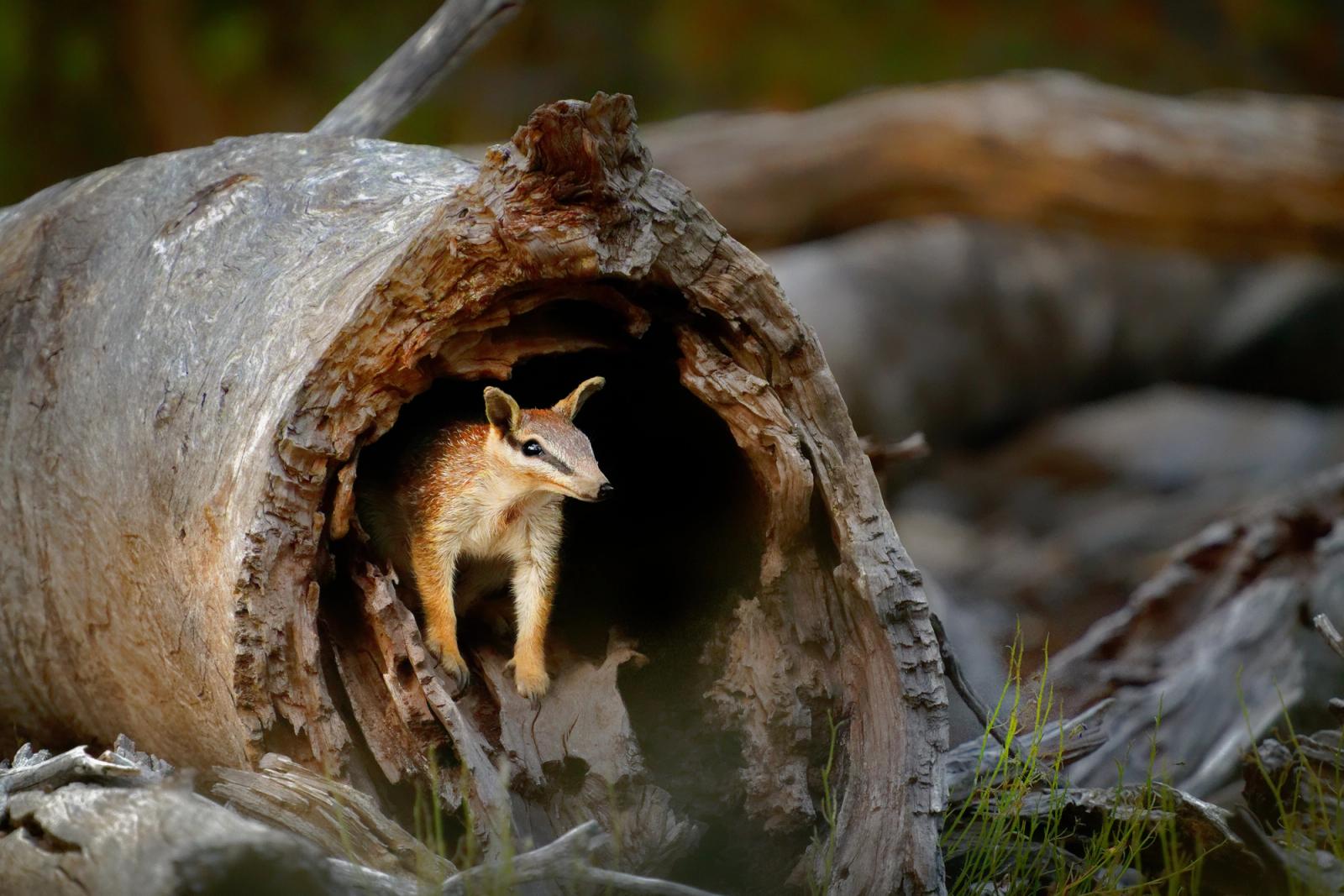
The IUCN has moved the numbat from Endangered to Near Threatened after four decades of recovery, one of conservation's rare genuine downlistings.
For most of the last half century the numbat, a small striped termite-eating marsupial and the faunal emblem of Western Australia, has been a species in retreat. In July 2026 it became something rarer: a genuine recovery. The IUCN moved the numbat from Endangered to Near Threatened, on the back of a population that has climbed from about 300 animals in the late 1970s to between 2,000 and 3,000 today.
How we know
The reclassification is the work of the IUCN Red List, the world's most authoritative record of extinction risk, published on 9 July 2026. The recovery behind it is the sum of four decades of unglamorous work: controlling the feral cats and foxes that prey on the numbat, breeding animals in captivity, and translocating them to establish new populations across southern Australia. A true downlisting is rare, only a small share of reassessed species improve because of genuine recovery rather than better data.
Why it matters
The numbat is one of the few marsupials active by day, and a single animal can eat up to 20,000 termites in a day, so its return is woven into the health of the woodlands it lives in. More broadly, an official move down the extinction ladder is proof that sustained predator control and reintroduction can pull a species back from the edge, not merely slow its decline.
Near Threatened is a step back from the brink, not safety. The numbat still occupies only about 0.04 percent of its former range, and the feral cats and foxes that drove its collapse have not gone away, so the recovery depends on constant management. Remove the predator control and the gains could reverse. The honest reading is a species recovering under careful watch, not a species saved.
What does the change from Endangered to Near Threatened actually mean?
It is a formal move down the IUCN Red List's extinction-risk scale, published on 9 July 2026. It records that the numbat's risk of extinction has fallen, not that the species is secure. Near Threatened still means a species close to qualifying for a threatened category.
How many numbats are there, and how much have numbers grown?
There are now between 2,000 and 3,000 numbats, up from about 300 animals in the late 1970s. The gain is real but it starts from a very small base, and the species still occupies only about 0.04 percent of its former range.
What caused the recovery?
Four decades of sustained work: controlling the feral cats and foxes that prey on numbats, breeding animals in captivity, and translocating them to establish new populations across southern Australia. No single measure did it; the recovery is the sum of all three, kept up over time.
What is still not solved?
The feral cats and foxes that drove the collapse have not gone away, so the numbat's numbers depend on constant management. If predator control stopped, the gains could reverse. The honest reading is a species recovering under careful watch, not a species saved.
Three verified stories, once a week.
Good news, checked against primary sources. Free.
Powered by Buttondown