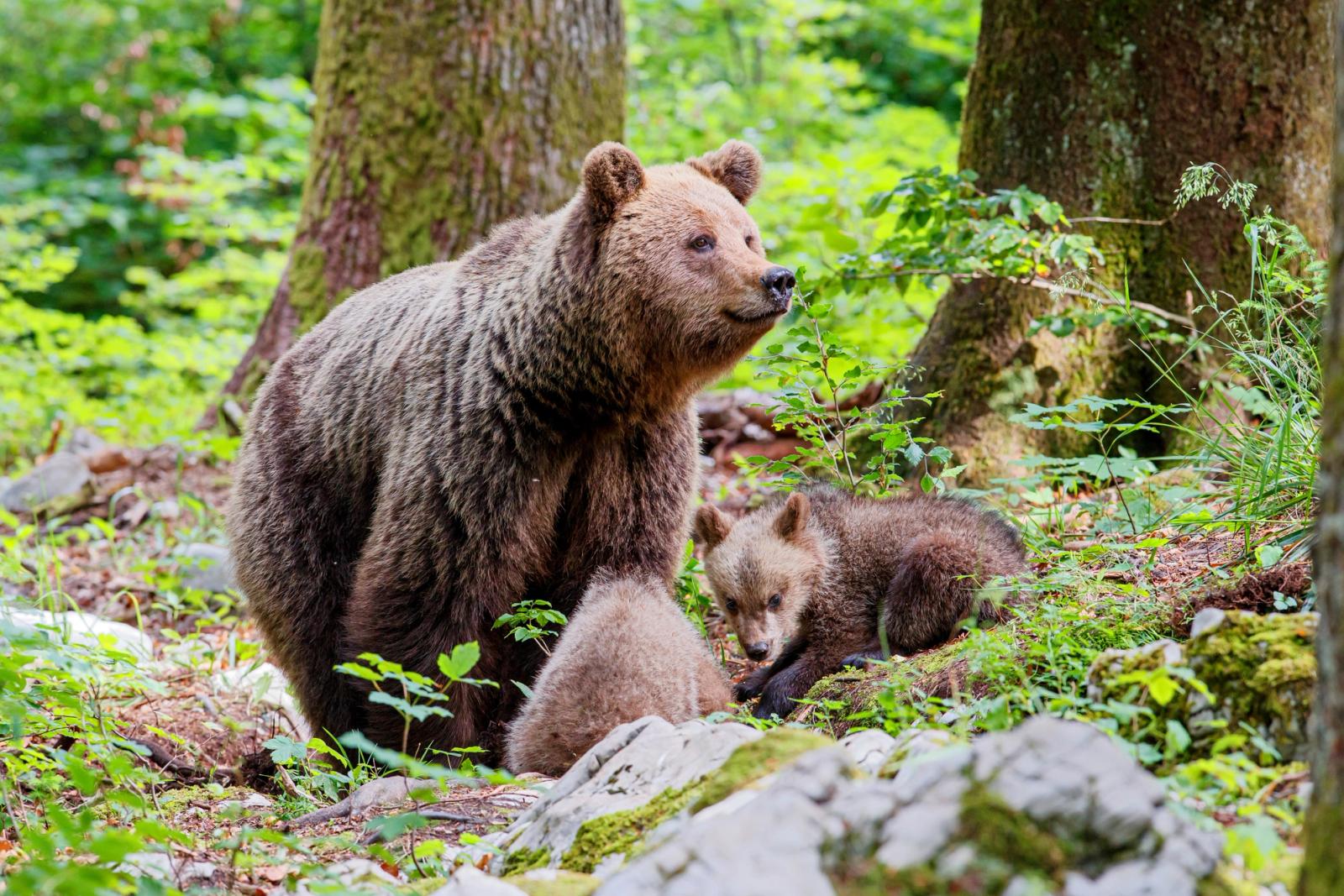
Genetic tests on hair and droppings picked out at least 108 different bears across France, Spain and Andorra in 2025, 30 years after the first were released. Fewer cubs were born than the year before, and the population is short of genetic variety.
In the Pyrenees, nobody needs to see a bear to count it. Field teams collect what bears leave behind: tufts of hair, droppings, footprints pressed into strips of soil raked smooth for three metres so that a paw leaves a clear mark, and images from automatic cameras. In 2025 the monitoring network of France, Spain and Andorra gathered 3,287 such signs, and genetic tests on 801 of them identified at least 108 different brown bears.
This year marks 30 years since the first bears were released into the mountains, in 1996. The early arrivals, among them a female called Ziva and a male called Pyros, came from Slovenia. Their descendants now range over about 7,000 square kilometres, a strip 224 kilometres long from eastern Ariège in France to north-eastern Navarre in Spain, and they cross the border freely: of the 108 bears identified, 41 percent were found only in France, 29 percent only in Spain or Andorra, and 30 percent on both sides.
The 108 is a floor, not a census. It is the number of individual bears the tests actually picked out, and each year's floor is revised as bears missed one year turn up the next. That is how the 2024 figure rose to 107 once 11 bears unseen that year were detected in 2025. Measured that way, the population grew by an average of 11.5 percent a year between 2006 and 2024. A statistical estimate that allows for the bears the tests missed puts the 2025 population between 109 and 143, most likely about 130.
How we know
The figures come from Ours infos 2025, the annual report of the Brown Bear Network run by the French Office for Biodiversity with its Andorran, Aragonese, Catalan and Navarrese counterparts, published on 26 March 2026. The hair and dropping samples were tested in laboratories in France and at the Autonomous University of Barcelona: 450 from France, 323 from Spain and 28 from Andorra. The Catalan public broadcaster 3Cat reported the same count of 108 from the cross-border monitoring group.
The report carries two kinds of number. The minimum count gets harder to keep complete as the population grows, because some bears inevitably go undetected in a given year. So the network is moving to capture-recapture, a statistical method that estimates a population's size from how often known individuals are detected again, and the range of 109 to 143 is its result. Each year's capture-recapture range also comes with its uncertainty stated, which a simple minimum cannot do.
Why it matters
Births swing from year to year. In 2025 the network found 6 litters with 8 cubs, against 24 cubs in 2024, but the cubs of 2024 did well: at least 22 of the 24 were seen alive in 2025. One of the new mothers was Claverina, released in the Béarn region in 2018 and raising her first litter. The father, a male called Beròi, was 3 years old when they mated. The report expects 29 to 31 females could have cubs in 2026.
The deeper problem is genetic. The report records rising inbreeding, which is mating between related animals, and low genetic diversity in the population. First results from a study by France's National Museum of Natural History, the French Office for Biodiversity and the Swedish University of Agricultural Sciences show that inbreeding harms bears early in life, with smaller litters, young that settle closer to where they were born, and lower cub survival among the most inbred mothers. The full results are due at the end of 2026.
Bears also share these mountains with sheep. Across the Pyrenees, 321 bear attacks on livestock were recorded in 2025. In France there were 289 attacks on livestock and 2 on beehives, down from 310 and 14 the year before, and almost all the animals lost were sheep. A French study of attacks from 2019 to 2025 found no individual bear that was significantly more predatory than the rest. The French state committed close to 5.7 million euros in 2025 to guarding flocks, shepherds' shelters and compensation, and from 2026 it will pay the full wages of shepherds on 25 high summer pastures in Ariège and Haute-Garonne that are most exposed to attacks.
Thirty years in, the bears have shown they can live in these mountains again. Whether they thrive depends on what the genetics study finds, and on how well people and bears keep sharing the high pastures.
The 2025 count is barely up on a corrected 107 for 2024, only 8 cubs were born against 24 the year before, and 9 bears were declared missing. Inbreeding is rising and genetic diversity is low, which early research links to smaller litters and weaker cub survival. The bears' range shrank slightly, and conflict with sheep farming continues, with 321 attacks on livestock recorded across the Pyrenees in 2025.
How do you count bears you rarely see?
Mostly from what they leave behind. In 2025 the cross-border network collected 3,287 signs, including hair, droppings, footprints and camera images, and genetic tests on 801 hair and dropping samples identified at least 108 individual bears.
Why are there two different numbers?
The 108 is a minimum, the bears positively identified in 2025. Because some bears are missed each year, a statistical estimate that allows for them puts the population between 109 and 143, most likely about 130, and the network expects to rely on it more as the population grows.
Why were so few cubs born in 2025?
The report does not give a reason. It records 8 cubs in 6 litters in 2025 against 24 cubs in 2024, while at least 22 of the 2024 cubs survived into 2025, and it expects 29 to 31 females could have cubs in 2026.
Do the bears cause problems for farmers?
Yes. Across the Pyrenees, 321 bear attacks on livestock were recorded in 2025, and in France almost all the animals lost were sheep. French attacks fell slightly from 2024, and the state committed close to 5.7 million euros in 2025 to protecting flocks and compensating losses.
- Office français de la biodiversité (Réseau Ours brun), Ours infos 2025, rapport annuel Primary
- 3Cat (Catalan public broadcaster), Més ossos als Pirineus: ja se supera el centenar d'exemplars tot i el fort descens de cadells
- Préfecture de la région Occitanie, Réunion du Groupe Ours, Pastoralisme et Activités de Montagne du jeudi 23 avril 2026
Three verified stories, once a week.
Good news, checked against primary sources. Free.
Powered by Buttondown