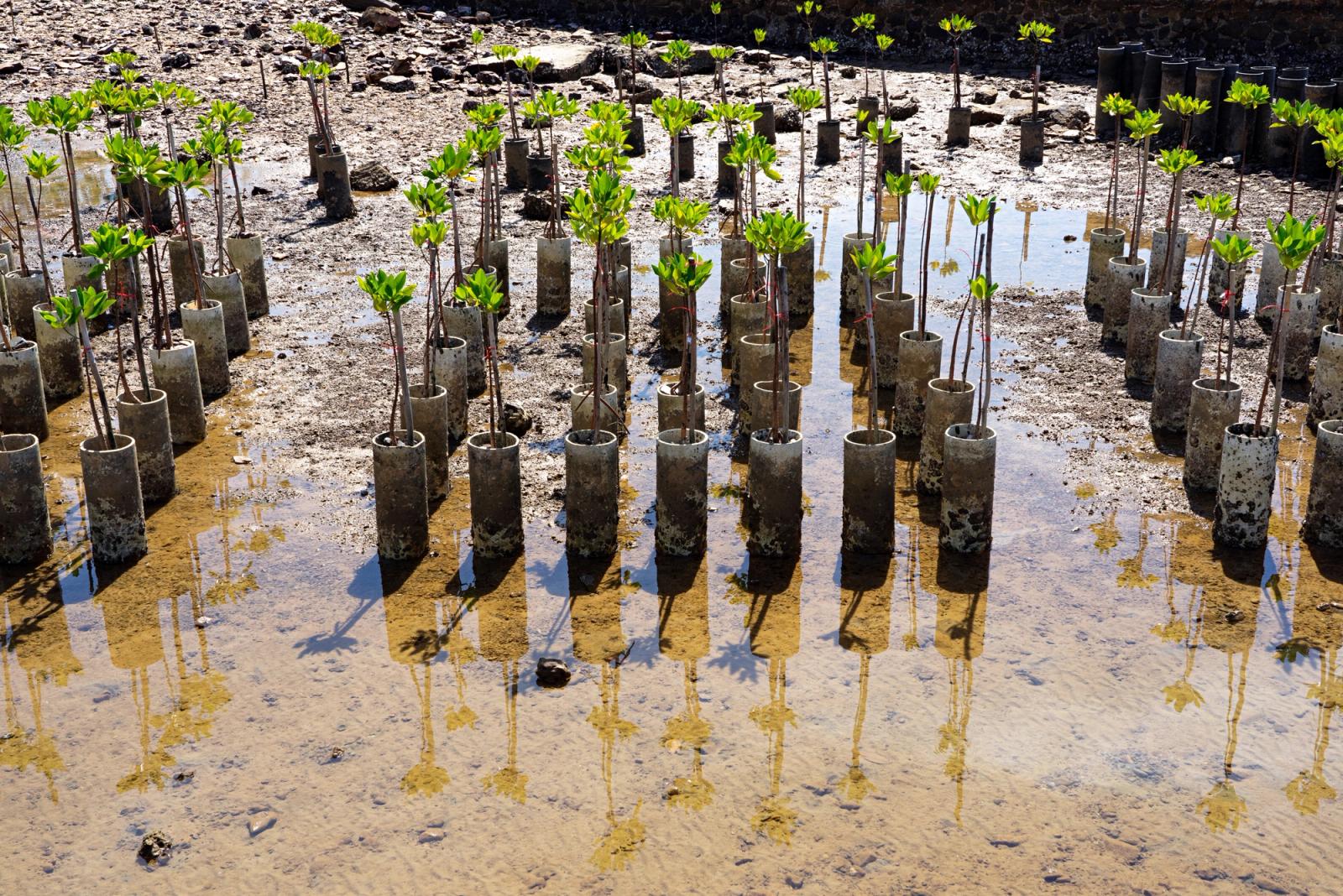
The UN's first global stocktake of restoration counts 252 million hectares of degraded land and water being brought back in 149 countries. On land the work is nearly halfway to its 2030 goal; rivers, wetlands and coasts lag far behind.
For the first time, the world has a count. Across 149 countries, 252 million hectares of degraded forest, farmland, wetland and coast are now under ecosystem restoration, the work of helping damaged or destroyed ecosystems recover, whether by planting or by lifting the pressures so that nature can recover on its own. It is the largest documented restoration effort to date, and it has already created more than one million green jobs.
The count comes from the first global stocktake of restoration, published on 29 October by the UN Food and Agriculture Organization (FAO), the UN Environment Programme (UNEP) and the Secretariat of the Convention on Biological Diversity. It was launched in Yerevan at the UN Biodiversity Conference, midway through the UN Decade on Ecosystem Restoration, which runs from 2021 to 2030.
On land, the news is strongest. Restoration of degraded land has reached nearly half of the global target for 2030 set by the Kunming-Montreal Global Biodiversity Framework, the international agreement on nature whose 30 by 30 goal asks that at least 30 percent of degraded land, freshwater, marine and coastal ecosystems be under effective restoration by the end of the decade. China reports the largest area on land, 127.4 million hectares, and Mongolia, Kazakhstan, Ethiopia and Indonesia also report substantial areas.
How we know
The report draws on government-endorsed data from global reporting processes, plus figures that restoration initiatives report to FAO's Framework for Ecosystem Restoration Monitoring. It is the first assessment to measure ecosystem restoration against both the roughly one billion hectares that countries have pledged to restore and the biodiversity framework's 2030 target. By region, Asia accounts for 192.2 million hectares, followed by Africa (36.3 million), Europe (9.1 million), North and Central America (5.8 million), South America (5.4 million) and Oceania (3.2 million). The authors say these are not rankings of ambition or performance: they reflect the scale of activity, the size of each region and how well each can monitor and report.
Water lags far behind. Freshwater restoration covers 11 million hectares across 62 countries, and marine and coastal restoration 5.7 million hectares across 46 countries, even though these ecosystems are degrading at the fastest rates. Limited reporting means the aquatic figures may be underestimates. There is one sign of momentum: the share of reporting Parties with wetland restoration or rehabilitation programmes in place has risen from 8 percent to 54 percent since 2022.
Why it matters
Restoration is slow, physical work, and its payoff is large. The report cites research finding that restoring 15 percent of the world's priority areas could capture carbon dioxide equal to 30 percent of its total rise since the Industrial Revolution, and help avoid 60 percent of species extinctions. Five projects, in China, Colombia, Ethiopia, Italy and the United States, were named UN World Restoration Flagships at the launch, and the report's examples range from mountain gorillas in East Africa and jaguars in Brazil to snow leopards in Kyrgyzstan and Ganges River dolphins in India.
The pace still falls short. To meet the 2030 targets, implementation must triple and annual restoration finance must rise more than fourfold, from 64 billion to 296 billion US dollars. Inger Andersen, UNEP's executive director, said the world is still not restoring nature at the scale or speed required. The report argues for a move from individual projects to restoration economies, and for judging progress not only by the area brought under restoration but by whether countries can keep ecosystems healthy for generations to come. A quarter of a billion hectares is a real start. Whether the money, and the rivers and coasts, follow in the next four years is a choice still to be made.
The figure counts land and water under restoration, not ecosystems already recovered, and it rests on what governments and projects report. China alone reports 127.4 million hectares on land. Freshwater (11 million hectares) and marine and coastal areas (5.7 million) lag far behind, and annual restoration finance must rise from 64 billion to 296 billion US dollars by 2030 to meet the targets.
Does 252 million hectares mean those ecosystems have recovered?
No. The figure is land and water where restoration work is under way, as reported by governments and restoration initiatives, not the area that has fully recovered. The report itself says that beyond tracking hectares, it is important to understand how restoration contributes to ecosystem integrity, connectivity, biodiversity and ecosystem services.
Why do China and Asia account for so much of the total?
China reports the largest area of land under restoration, 127.4 million hectares, and Asia as a whole accounts for 192.2 million of the 252 million hectares. The report says these regional figures are not rankings of performance. They reflect the scale of restoration activity, the size of each region and its capacity to monitor and report.
Which ecosystems are falling behind?
Freshwater and marine and coastal ecosystems. Freshwater restoration covers 11 million hectares in 62 countries and marine and coastal restoration 5.7 million hectares in 46 countries, though these ecosystems are degrading fastest. Limited reporting means these figures may be underestimates.
What would it take to meet the 2030 targets?
The report finds that implementation must triple and annual restoration finance must rise more than fourfold, from 64 billion to 296 billion US dollars by 2030. It also calls for secure land tenure and the meaningful participation of Indigenous Peoples and other rights holders, so that restoration lasts.
- UNEP (report by FAO, UNEP and the CBD Secretariat), Restoration Progress Report: Nature's comeback - Scaling ecosystem restoration for people and planet Primary
- FAO, Nature is making a comeback, but the world must move faster to meet restoration targets - UN report
- IISD SDG Knowledge Hub, UN Report Calls for Restoration Economies to Expedite Nature's Comeback
Three verified stories, once a week.
Good news, checked against primary sources. Free.
Powered by Buttondown